
 Call your local pro today!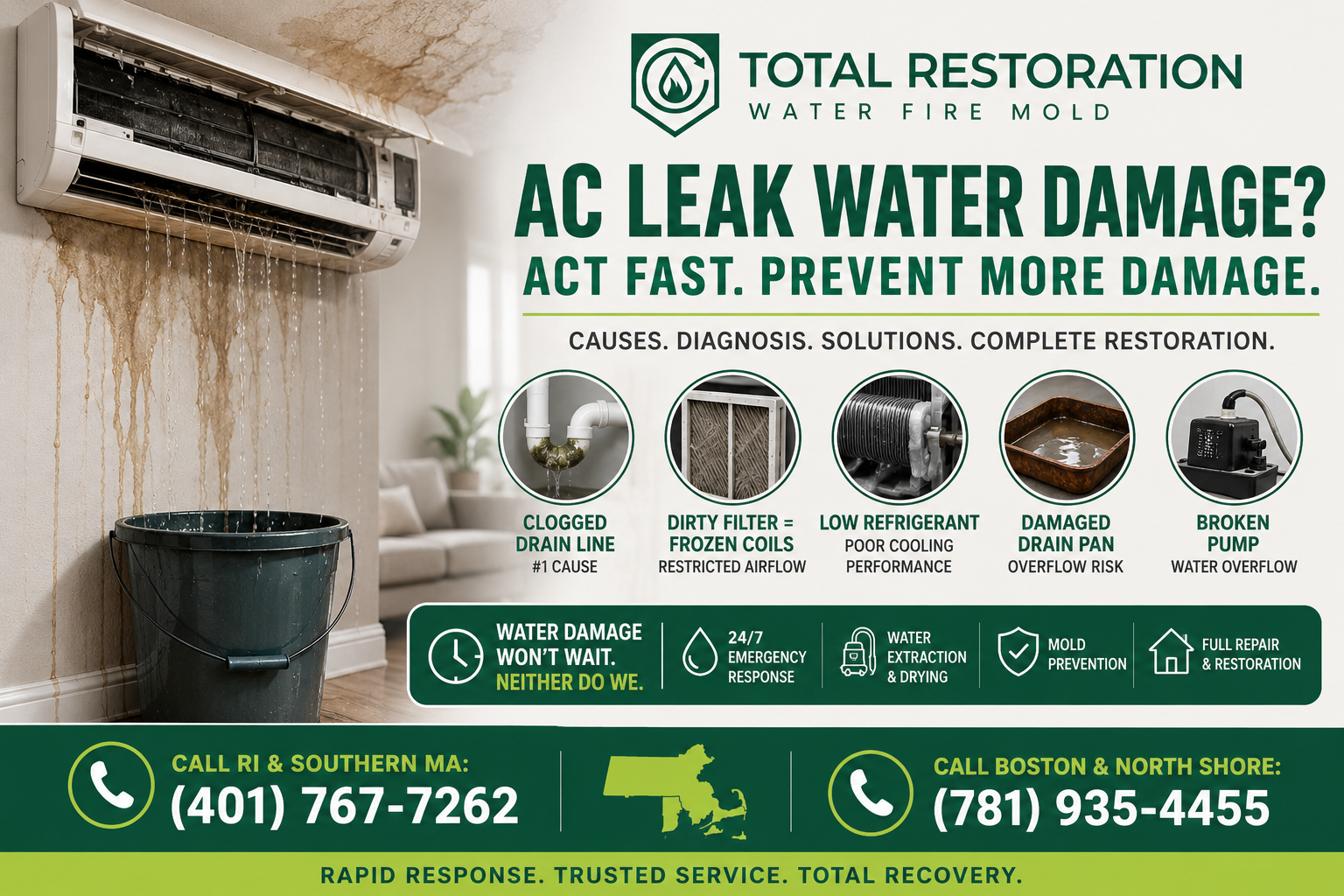
AC leak water damage happens when your air conditioning system releases more moisture than its drainage components can handle, and it spreads fast. Whether you're a homeowner in Greater Boston or a property manager in Rhode Island, understanding what causes a leaking AC, how to diagnose it quickly, and when to call a professional can save you thousands in structural repairs and mold remediation. This guide covers the most common causes of AC water leaks, how to inspect your system safely, and the proven steps Total Restoration takes to stop the damage and fully restore your property.
Key Takeaways
- AC leak water damage is most often caused by a clogged condensate drain line, frozen evaporator coils, or a damaged drain pan—all of which are preventable with routine maintenance.
- Acting fast after you notice water leaking from your AC unit is critical to preventing mold growth and structural deterioration.
- A dirty air filter and low refrigerant are the two leading maintenance failures that trigger leaking water inside the home.
- Total Restoration provides 24/7 emergency response across Massachusetts and Rhode Island—from immediate water extraction through complete structural drying and repair.
- Proactive steps, such as installing a float switch and scheduling annual tune-ups, dramatically reduce your risk of repeat failures.
Understanding How AC Systems Create Condensation
Your home air conditioner doesn't just cool the air—it removes moisture from it. During the cooling process, warm indoor air passes over the evaporator coil, which is cold enough to cause water to form on its surface through condensation. Under normal conditions, that excess moisture drips into the condensate drain pan and exits through the condensate drain line. When any part of that chain fails, you get AC leaking water inside—sometimes slowly, sometimes all at once.
Drain Pan, Damaged Drain Pan, and Condensate Pump
The drain pan (also called the condensate pan or condensate drain pan) sits directly beneath the evaporator coil and catches every drop of condensation your system produces. A rusted drain pan, cracked drain pan, or corroded drain pan can allow water to pool and overflow before it ever reaches the drain. In systems where gravity drainage isn't possible—such as units installed in attics or finished basements—a condensate pump actively moves water out. A malfunctioning condensate pump is one of the more frequently overlooked sources of AC water damage.
Common Causes of AC Leaks and Water Damage
Most air conditioner leaks trace back to one of five failure points.
Clogged Condensate Drain Line
A clogged condensate drain line is the single most common cause of an air conditioner leaking water. Algae, debris, and dust accumulate inside the condensate line over time, blocking drainage and causing the drain pan to overflow. Look for standing water near your indoor unit or discoloration on nearby drywall as early warning signs of a clogged drain.
Dirty Air Filter and Restricted Airflow
A dirty air filter or a clogged filter restricts proper airflow across the evaporator coil. Without adequate airflow, the coil gets too cold, and frozen coils develop—and when those frozen evaporator coils thaw, the sudden surge of meltwater often overwhelms the condensate drain pan, causing water to drip throughout the unit. Replace your air filter every 1 to 3 months during the peak cooling season.
Low Refrigerant and Cooling Performance Loss
Low refrigerant pressure causes the evaporator coil to run colder than designed, increasing the risk of frozen coils. Beyond the risk of leaks, declining cooling performance—such as warm air blowing from vents—is often the first sign that refrigerant levels are low. A licensed HVAC technician should always address a refrigerant leak.
Improper AC Installation and Misaligned Systems
Improper installation—particularly a unit that isn't level—causes the drain pan to collect water unevenly, bypassing the drain line altogether. Improper AC installation is a common but easily overlooked cause of recurring water leakage, and it's worth having a certified tech verify drain slope and electrical components during any post-installation inspection.
Broken or Malfunctioning Condensate Pump
A broken condensate pump fails to remove water from the condensate drain pan, leading to overflow and, eventually, AC water damage to surrounding walls and ceilings. If you notice the pump running but water leaking continues, or if you hear strange noises near the unit, it's likely time for a replacement.
Diagnosing an AC Leak and Locating the Water Source
Quick Visual Checks
- Check ceilings and drywall near your air conditioning unit for staining or soft spots
- Inspect the visible drain pan for cracks, rust, or standing water
- Look for ice on refrigerant lines or along the evaporator coil—a clear sign of frozen coils
Step-By-Step Indoor Unit Inspection
- Turn off the thermostat and circuit breaker to the unit before any close inspection
- Remove the service panel to access the drain pan and look for overflow or damage
- Probe the condensate drain with a wet vacuum to clear minor blockages in the clogged drain line
- Test the condensate pump by pouring a small amount of water into the pan—if it doesn't activate, the pump has failed
When Strange Noises or Poor Cooling Performance Appear
A bubbling noise near the drain line often signals a blockage. Poor airflow or airflow problems combined with warm air at the vents points to either a dirty filter, dirty coils, or a refrigerant issue. These symptoms together warrant an immediate professional inspection to avoid complete system failure.
Immediate Actions to Minimize Water Damage
- Turn off your AC system at the thermostat and breaker to prevent electrical hazards
- Place towels or buckets under any water dripping to limit the spread
- Document all visible damage with photos for your insurance claim
- Call Total Restoration for 24/7 emergency response—the faster water is extracted, the lower your risk of mold growth and structural damage
Repair Options: Quick Fixes vs. Component Replacement
| Scenario | Quick Fix | Replace Component |
| Clogged condensate drain line | Flush with wet vac or CO₂ cartridge | Replace if cracked or collapsed |
| Damaged drain pan / frozen coils / broken condensate pump | Temporary patch or reset | Replace rusted pan, failed pump, or unit 12–15+ years old |
Most professional repair decisions depend on age, recurrence, and repair costs. A single clog in a newer AC unit is almost always worth fixing. Repeated failures in an older air conditioning system—especially combined with low refrigerant or electrical components showing wear—typically justify full replacement.
Restoration Workflow for AC Leak Water Damage
Total Restoration's IICRC-certified team follows a structured, white-glove approach from the first call to final sign-off.
Emergency Mitigation Steps
- Immediate water extraction: High-capacity pumps remove standing water from affected floors, walls, and crawl spaces
- Drying equipment deployment: Commercial air movers and dehumidifiers are set within hours to halt mold spores from activating
- Humidity monitoring: Sensors track moisture levels daily to confirm materials are drying completely and to prevent excessive condensation buildup in hidden cavities
Full Recovery and Repair
Once mitigation is complete, our team coordinates professional repair of all water-affected structures alongside your HVAC technician's work. We provide transparent status updates, detailed insurance documentation, and restore your property to pre-loss condition—not just surface level.
Preventive Maintenance and Best Practices
- Replace your air filter monthly during peak cooling season—a dirty filter is the easiest preventable cause of AC leaks
- Install a float switch on the condensate drain pan: it automatically shuts off the air conditioner when water reaches a dangerous level
- Clear the condensate drain line with a diluted bleach solution twice per year to prevent buildup
- Schedule an annual HVAC tune-up with a certified technician to inspect refrigerant lines, dirty evaporator coils, and electrical components before problems compound
- After any water event, have Total Restoration assess for hidden moisture—mold growth can begin in as little as 24–48 hours if materials aren't dried properly
Common Challenges and Solutions
Hidden attic leaks that mimic AC problems: A slow roof leak near HVAC ductwork can look identical to AC leaking water on the ceiling drywall. Always inspect attic insulation around duct joints and rule out roofing issues before assuming the air conditioning unit is at fault.
Recurring leaks after repairs: If leaking water returns shortly after a fix, the likely culprits are a drain slope, a cracked drain pan that was patched rather than replaced, or an underlying refrigerant leak that was never properly addressed.
Mold growth following water damage: Any delay in drying after ac water damage creates conditions for mold spores to colonize drywall, insulation, and framing. If you notice musty odors or visible growth within days of a leak, professional mold remediation—not just surface cleaning—is the correct next step.
Take Action Before AC Leak Water Damage Spreads
A leaking air conditioner moves fast, but the response doesn't have to be complicated: identify the source, act immediately to limit the spread, and partner with a certified team that handles everything from water extraction to full structural restoration. Whether you're dealing with a clogged condensate drain, frozen evaporator coils, or a broken condensate pump, Total Restoration has the experience, equipment, and local knowledge to get your home or business back to normal.
Your next three steps:
- Turn off the AC unit and document the damage
- Call or text Total Restoration for a 24/7 emergency assessment
- Schedule a preventive HVAC inspection before the next cooling season
Contact Total Restoration today—we serve homeowners and property managers across Massachusetts and Rhode Island with rapid response, IICRC-certified technicians, and a white-glove commitment to total recovery. Rapid Response. Trusted Service. Total Recovery.
Dealing With Water Damage or Mold in Greater Boston or Rhode Island? Contact Total Restoration Today!
Water damage and mold don't wait, and neither should you. Total Restoration provides rapid-response water damage restoration and mold remediation for homes and businesses, backed by advanced moisture detection, thermal imaging, and a white-glove approach to complete recovery. Available 24/7, our IICRC-certified team is ready to help the moment you need us. For emergency service or to schedule an inspection, contact Total Restoration today:
RI & Southern MA
Call: (401) 767‑7262Boston & North Shore
Call: (781) 935‑4455Frequently Asked Questions
Is it normal for an AC to leak water inside?
Small amounts of condensation are normal, but visible water dripping inside your home is not. If you notice water pooling near your indoor unit or staining on walls and ceilings, it's a sign that your condensate drain line, drain pan, or evaporator coil needs attention.
Can I safely clear a clogged condensate drain myself?
A minor clogged drain line can sometimes be cleared with a wet vacuum or a diluted bleach flush at the access point. However, if the clog recurs, if you notice a cracked drain pan, or if water damage to surrounding materials is already visible, call a professional—further damage from a second overflow can be significant.
How fast can water damage lead to mold?
Mold growth can begin within 24–48 hours in warm, damp conditions. AC leak water damage that isn't dried properly—especially inside walls, under flooring, or in attic insulation—creates an ideal environment for mold spores to develop quickly. Rapid extraction and professional drying are essential.
When should I replace a damaged drain pan?
A damaged drain pan showing rust, cracks, or chronic overflow should be replaced rather than patched. Temporary fixes on a rusted drain pan or corroded drain pan rarely hold through a full cooling season, and a second failure often causes more extensive water damage than the first.